Tripmi★★★★★ Use it free online · Web & iOS
Open
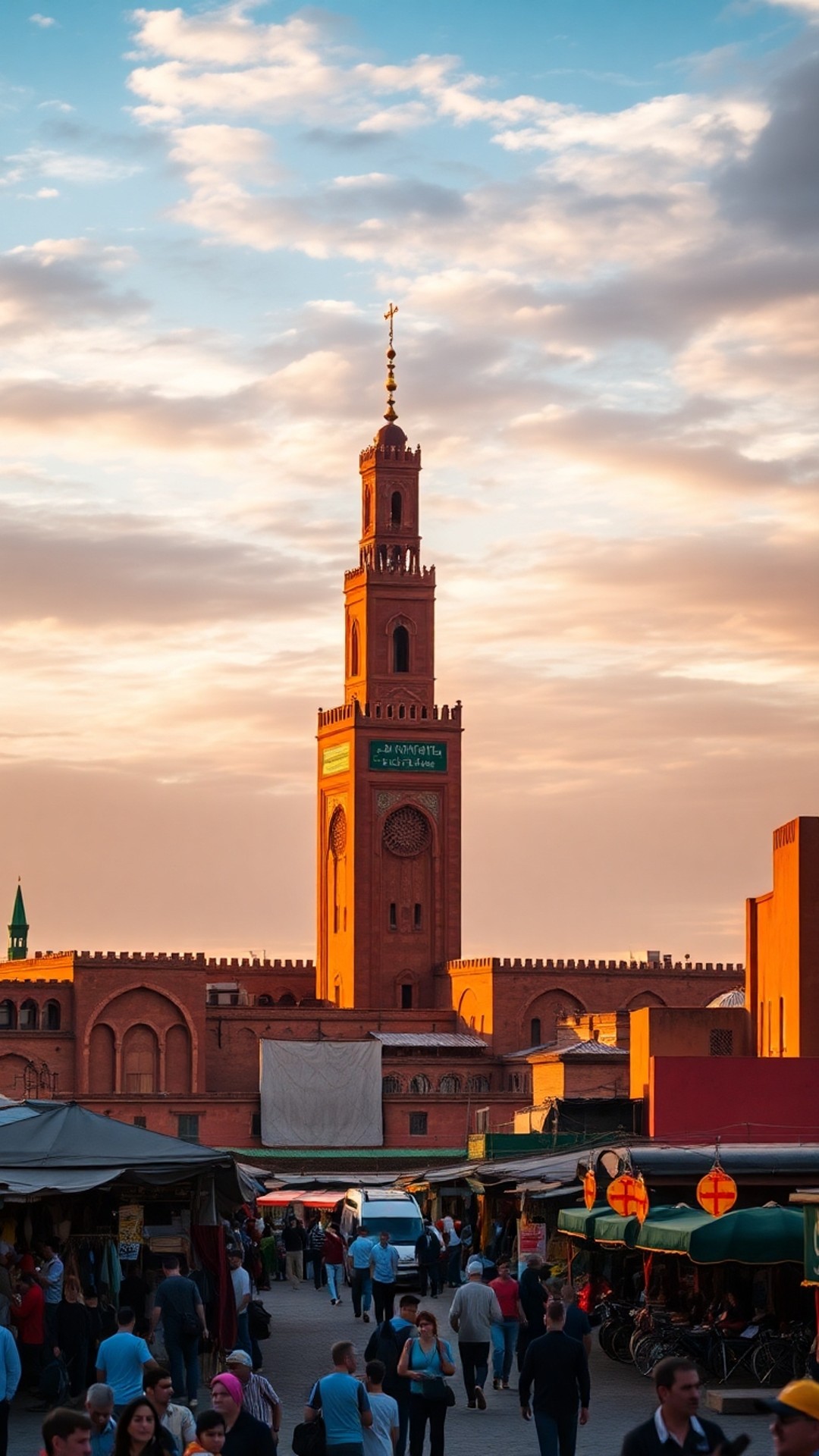
Colors, souks, spices and timeless rhythms — Marrakech is a sensory city where centuries-old medina lanes, ornate palaces and bustling souks collide with contemporary riads and lively café culture. Visit to experience Morocco’s vivid architecture, street life around Jemaa el-Fna, and world-class gardens all within easy reach of the Atlas Mountains.
A cinematic tour of the top sights, food and local tips. Get your own AI voice guide and a trip planned just for you in the Tripmi app.
The city’s central square transforms from orange-juice stalls by day to an open-air theatre of storytellers, musicians and food vendors at night.
12th-century mosque with an iconic 77-meter minaret visible across the city; non-Muslims cannot enter but the gardens and views are picturesque.
A late 19th-century palace famed for its intricate zellij tilework, carved cedar wood and sunlit courtyards.
Rediscovered in 1917, these ornately decorated 16th-century tombs offer finely carved stucco and marble chambers.
Lush botanical gardens created by French painter Jacques Majorelle and restored by Yves Saint Laurent, adjacent to the Berber Museum.
Former Islamic college with one of the finest examples of Moroccan tilework and a stunning central courtyard.
Ruined 16th-century palace offering dramatic sunlit ramparts and a sense of scale from its large open courtyard.
Restored riad garden in the medina featuring traditional Islamic garden design and rooftop views over the old city.
Museum of Moroccan arts and crafts housed in a beautiful 19th-century palace with extensive wood and tile work.
A sprawling network of specialty lanes selling leather goods, metalwork, carpets and spices—perfect for bargaining.
Small museum showcasing historical photographs of Morocco with a rooftop cafe offering medina panoramas.
Many riads offer hands-on Moroccan cooking classes where you learn to prepare tagine and couscous in traditional kitchens.
The modern quarter with boutiques, cafes, art galleries and a different atmosphere from the medina.
A vast palm oasis on Marrakech’s outskirts offering camel rides, quad tours and peaceful palmeraie walks.
Terraced rooftop cafés provide essential medina views, mint tea and a good vantage point for people-watching.
Watch the square come alive with performers, street food stalls and snake-charmers as the light fades.
Choose a reputable hammam for a steam, scrub and massage—many riads offer private spa packages.
Practice polite bargaining for leather, lamps and carpets while following local custom and starting lower than your target price.
Combine the vivid botanical gardens with the fashion museum next door for design and cultural insight.
Enjoy camel or short quad excursions among the palm groves as the sun sets over the plain.
Escape the city for mountain villages, waterfalls and guided hikes under two hours from Marrakech.
Historic heart with narrow lanes, souks and riads ideal for first-time visitors who want to be close to main attractions.
The modern district with wider boulevards, shops, galleries and more straightforward transport links and nightlife.
Upscale area with luxury hotels, clubs and leafy avenues suited to travelers seeking higher-end dining and nightlife.
Quieter resort-style area with large palm groves, luxury villas and space for relaxation outside the bustle.
Slow-cooked stew served in a conical clay pot, available with lamb, chicken, beef or vegetables and regional spices.
Steamed semolina traditionally served with vegetables and meat, often enjoyed on Fridays in Moroccan households.
Savory-sweet pigeon or chicken pie layered with almond and cinnamon, wrapped in crisp warqa pastry.
Hearty tomato-and-lentil soup often eaten to break fasts during Ramadan and as a warming starter.
Highly sweet green tea poured in a slow, theatrical stream—Morocco’s ubiquitous hospitality drink.
Steamed semolina or vermicelli with cinnamon, sugar, and toasted almonds, served as dessert or celebratory dish.
A scenic 1–1.5 hour drive to waterfalls and Berber villages in the foothills of the High Atlas.
One of Morocco’s highest waterfalls—roughly a 2.5–3 hour drive—offering boat rides and hiking amid olive terraces.
UNESCO ksar about 3.5–4 hours away, famous for earthen architecture and frequent film locations (best combined with an organized tour).
The riad we stayed in was a peaceful oasis just off Jemaa el-Fnaa — perfect for naps between exploring, and the rooftop mint tea at sunset was unforgettable.
I loved wandering the souks and bargaining for leather bags; the colors, smells and friendly stall owners made the whole experience lively and surprisingly warm.
The food blew me away — tagine and fresh orange juice from the street markets were highlights, and the historical sites like Bahia Palace are beautifully kept.
Amazing value for money: affordable guesthouses, cheap delicious street food, and the medina is a photographer's dream if you like hidden alleys and ornate tiles.
Great vibe and friendly people, but expect persistent touts in tourist areas; once you get past that, the gardens and riads are worth the trip.
Two-way voice & text translation in 17 languages — speak with confidence abroad.