Tripmi★★★★★ Use it free online · Web & iOS
Open
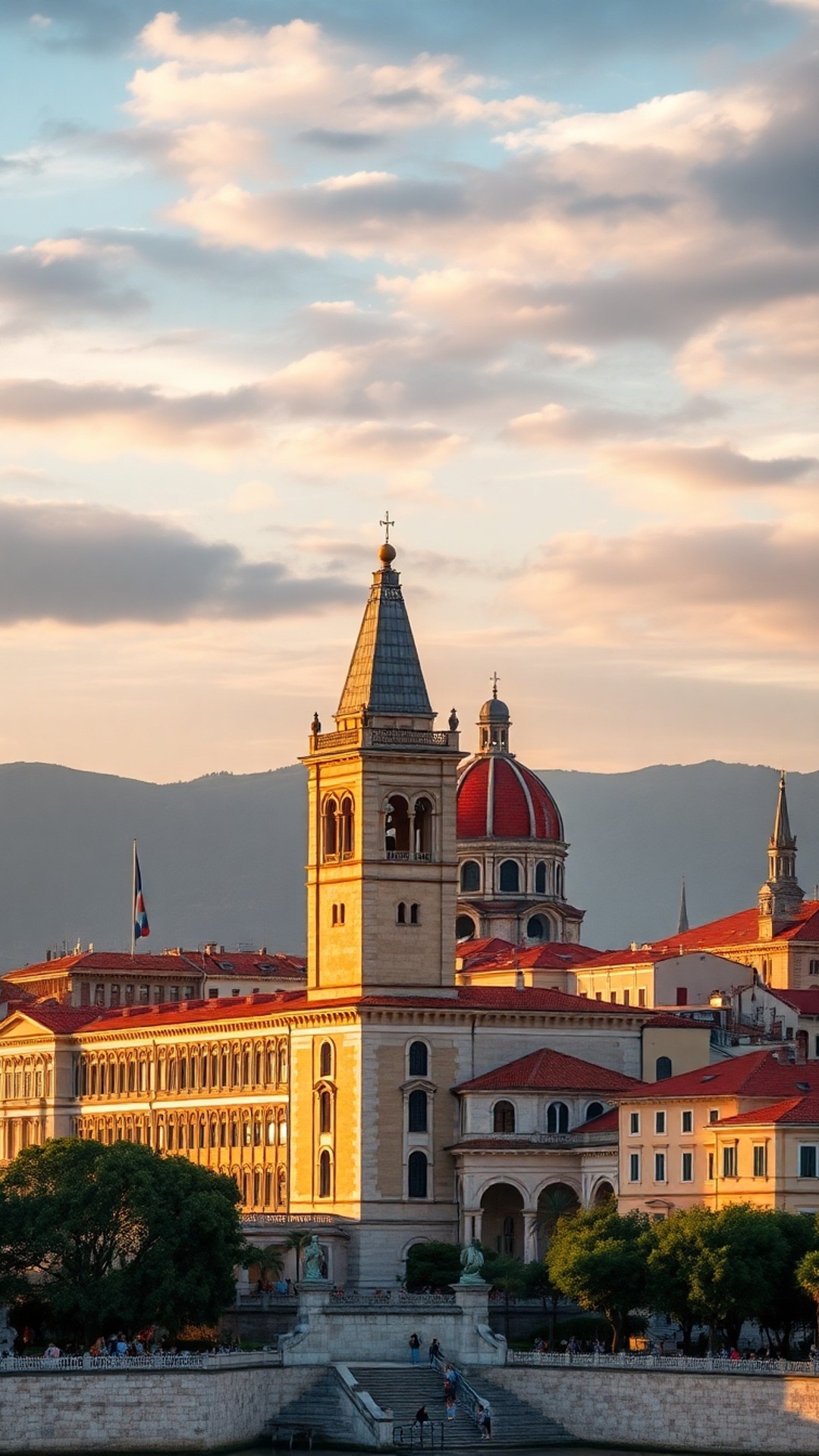
Ancient palace, Adriatic sunlit charm — Split combines a living Roman palace, vibrant Mediterranean waterfront, and easy access to islands and nature. Its blend of history, lively markets, beaches, and cafés makes it a compact, endlessly walkable destination.
A cinematic tour of the top sights, food and local tips. Get your own AI voice guide and a trip planned just for you in the Tripmi app.
A remarkably preserved 4th-century Roman palace that forms the heart of the old town, with cellars, peristyles, and narrow streets teeming with shops and cafés.
Built into Diocletian's mausoleum, this cathedral features a Romanesque bell tower offering panoramic views after a climb.
The bustling waterfront promenade lined with palm trees, cafés, and people-watching — ideal at sunrise or for evening passeggiata.
A pine-covered hill with trails, secluded viewpoints, and small beaches, perfect for hiking, cycling, and sunset vistas over Split and the islands.
The city's most popular sandy beach, known for shallow water and the local ball game 'picigin'; lively at day and night.
Housed within Diocletian's Palace, the museum traces Split's history from Roman times through the Venetian and Austro-Hungarian eras.
The 10th-century bishop's bronze statue by Ivan Meštrović sits near the Peristyle; tradition says rubbing his toe brings good luck.
Fresh produce, local cheeses, and flowers sold every morning beside Diocletian's Palace — great for picnic supplies and people-watching.
A quirky private museum exhibiting anthropomorphic taxidermy frogs depicting human scenes — a unique and offbeat stop close to the palace.
Dedicated to Croatia's most famous sculptor, set in a serene villa with sculptures, sketches, and beautiful gardens.
A quieter pebble beach on the south side of Marjan, edged by pine forest and a seaside restaurant.
One of the oldest residential quarters with stone alleys, authentic konobas, and a genuine local atmosphere near the sea.
A small piazza with pleasant cafés and a view into the layered streets of the palace; historically the site of a medieval fruit market.
The hub for ferries and catamarans to Hvar, Brač, Vis and other islands as well as mainland destinations — indispensable for island hopping.
Landmark stadium known for its distinctive 'sea shell' design and lively football matches when local club Hajduk Split is playing.
Explore subterranean cellars, Roman peristyles, and hidden courtyards to feel the city's layered history.
Take day trips to nearby islands like Hvar, Brač (Bol and Zlatni Rat), and Vis for beaches and secluded coves.
Climb trails to viewpoints for sweeping panoramas of Split and the Adriatic as the light fades.
Join locals in the shallow waters for the traditional ball game or relax on the sand.
Savor local seafood, grilled meats, and stone-baked specialties paired with regional wines.
Listen to traditional a cappella Dalmatian singing in intimate venues or squares for an authentic cultural experience.
Stay here to be immersed in history with immediate access to major sights, cafés, and nightlife.
Ideal for first-time visitors who want scenic sea views, promenading, and easy transport links.
A quieter, authentic residential area with stone streets and traditional eateries close to the palace.
Best for beach lovers and families seeking sandy shores and a more relaxed, seaside vibe.
Slow-cooked meat or octopus with vegetables under a metal bell — rich, tender, and a local specialty.
A hearty Dalmatian beef stew braised in a sweet-sour sauce, typically served with gnocchi.
A rustic fish stew served with polenta, showcasing local mixed seafood in a tomato-based sauce.
Fresh-caught fish simply seasoned with olive oil, lemon, and herbs — widely available at konobas.
Clams or mussels cooked in wine, garlic, and parsley — a light, fragrant shellfish preparation.
Mini Croatian doughnuts dusted with powdered sugar, often found at markets and bakeries.
Famous for lavender fields, lively nightlife, and the historic Hvar Town — reachable by fast catamaran.
Home to Zlatni Rat beach, one of Croatia's most photographed pebbled spits and top windsurfing spots.
A compact UNESCO-listed medieval town 30 minutes by bus with well-preserved architecture and a charming harbor.
Stumbled through Diocletian's Palace at sunrise and the light on the stone was unbeatable — great coffee stalls nearby and friendly locals who pointed me to a tiny konoba for the best grilled fish.
Loved the mix of ancient streets and a lively waterfront — spent evenings trying pašticada and craft beers while listening to live music on the Riva.
Beautiful city with excellent seafood and easy boat trips to nearby islands, though some popular spots felt crowded in mid-March; still worth it for the history and vibe.
Amazing value for accommodation and food compared to other Mediterranean cities — I loved wandering the back alleys and finding unexpected bakeries and rooftop bars.
Home bias aside, Split is lovely: people are warm, the markets are full of fresh produce and olive oil, and the afternoon ferry sails are a perfect escape from the city heat.
Chat by voice, text or photo for local tips, food and directions — 24/7 in the Tripmi app.